
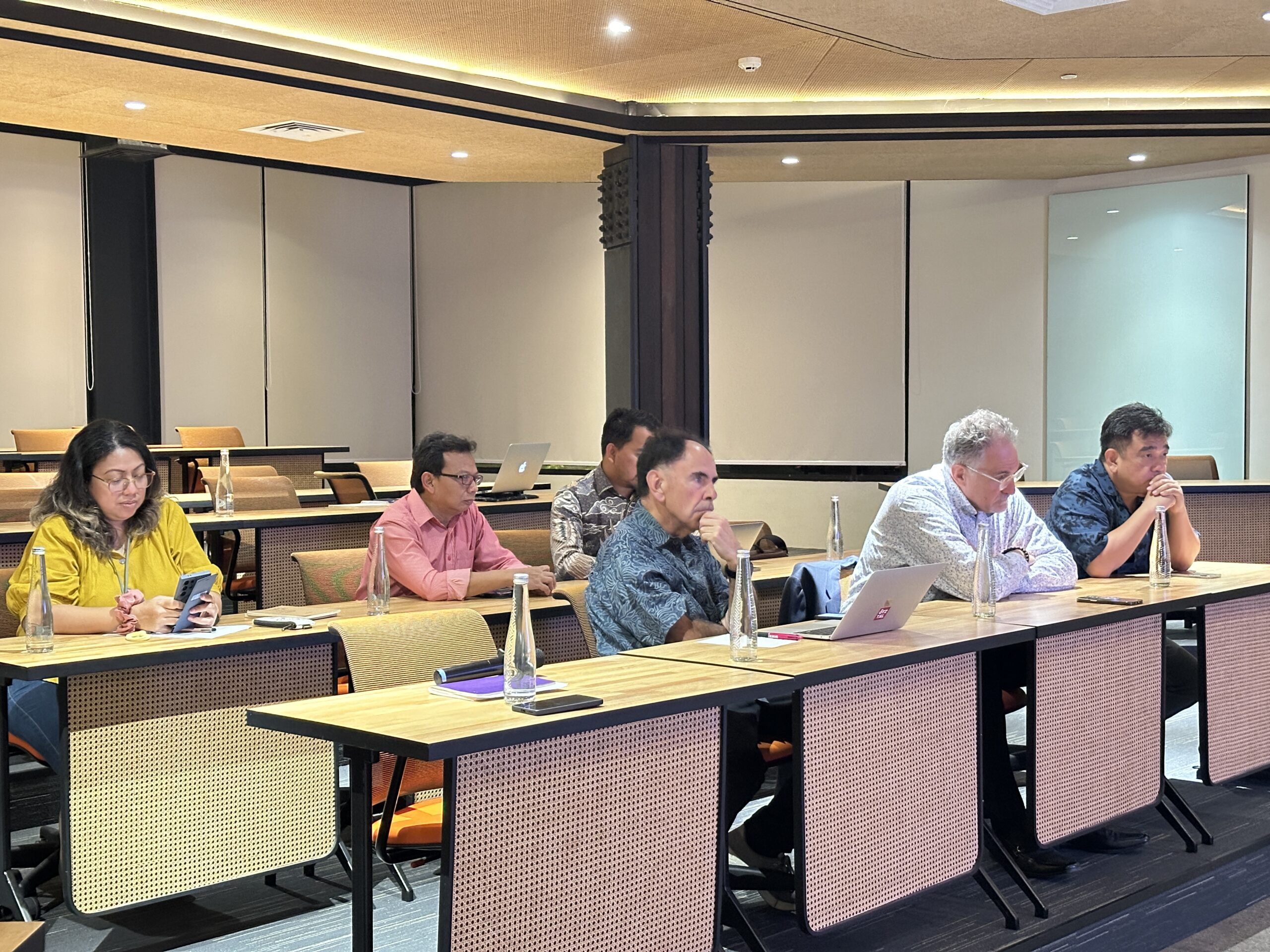
30 April 2024 – United in Diversity Foundation and Tsinghua Southeast Asia Center Host 2024 Academic Summit, Bali
Bali, Indonesia – April 30, 2024 – The 2024 United in Diversity Foundation (UID) and Tsinghua Southeast Asia Center (TSEA) Academic Summit convened at the UID Bali Campus and hybrid online, gathering 35 distinguished experts from academia and industry. This momentous event focused on the strategic and operational development of academic programs, activities, and the establishment of the initial faculty.
The summit commenced with inspiring remarks from Sir Gordon Duff, Honorary President of UID. Celebrating UID’s 20-year legacy in fostering tri-sector trust and advancing the United Nations Sustainable Development Goals (UN SDGs), Sir Gordon highlighted the founding of TSEA as a collaborative effort between UID and Tsinghua University in 2018. He underscored the potential of innovation in entrepreneurship, health, and ICT to drive sustainable development in Bali, Indonesia, Southeast Asia, and beyond.
Prof. Mats Hanson, Chair of the Faculty at UID, introduced the newly appointed Senior Academic Advisors, who will guide UID and TSEA from a strategic, long-term perspective. The esteemed advisors include:
- Prof. Satryo Soemantri Brodjonegoro, Fellow of the Indonesian Academy of Science (AIPI)
- Prof. José Zaglul, President Emeritus, EARTH University
- Prof. John Climax, CEO, Afimmune
- Dr. Lincoln Tsang, Partner, Ropes and Gray LLP
- Prof. Richard Miller, President Emeritus, Olin College of Engineering
- Prof. Regis Kelly, UC San Diego
- Prof. Philip Yeo, Chairman, Economic Development Innovations Singapore
Additionally, Prof. Hanson announced the Founding Faculty Fellows program and introduced Prof. Sen Song from Tsinghua University as the first Founding Faculty Fellow at TSEA.
The plenary session concluded with a keynote address by Prof. Edward Crawley, Senior Advisor to TSEA and Ford Professor of Engineering at MIT. Prof. Crawley, who is also an Honorary Professor at Tsinghua University, outlined TSEA’s current academic initiatives, including the Happy Digital X, The Tsinghua Happiness Entrepreneurship Bootcamp, and the upcoming Smart Supply Chain Management program. He emphasized the summit’s role in gathering input on the strategic goals and programs of UID and TSEA and highlighted the critical importance of collaboration in achieving these objectives.
Following the plenary, attendees participated in three focused breakout sessions, each addressing a key area of academic interest:
- Innovation & Entrepreneurship
- Human Health, Biotechnology, & Digital Science
- Artificial Intelligence & Data Science
The session on Innovation and Entrepreneurship, led by Prof. Edward Crawley and moderated by Michael Tuori, Academic Director of TSEA. The session was attended by entrepreneurs and academics from around the world and opened with a discussion of what they have learned over the years and how it can be applied in Southeast Asia. This transitioned into a lively discussion about how to create a universal model for teaching entrepreneurship that can be tailored to one’s local context. Key contributions included Mr. Dei Sudarmo, Special Advisor to the Minister of Education, Culture, Research, and Technology of Indonesia, who highlighted local opportunities and challenges, and Prof. Victor Chan, Vice Dean of the Tsinghua Shenzhen International Graduate School, who discussed the school’s Proof of Concept Center initiative. Ravenna Chen, Director of TusStar Asia-Pacific, shared her experiences with the Tsinghua Happiness Entrepreneurship Bootcamp at TSEA, emphasizing the importance of early and visionary entrepreneurship education. Senior Academic Advisors Prof. Richard Miller and Prof. Jose Zaglul also stressed the need for value-based, experiential entrepreneurship education to promote equity and sustainable development.
In the Human Health, Biotechnology, & Digital Science session, led by Sir Gordon Duff and moderated by Alexandra Mounsey, Head of UK and Special Project Director of UID, discussions centered on optimizing the UID Bali Campus’s impact in Indonesia and beyond, in alignment with the UN Sustainable Development Goals. Prof. Regis Kelly, a Senior Academic Advisor, proposed developing a few centers of excellence rather than dispersing investments across the university sector to attract significant investment and world-class talent. The goal is for UID and TSEA to become a center of excellence, drawing top researchers and students and ensuring their alumni are highly regarded by leading institutions. This strategy received strong support from Prof. Linqi Zhang, Director of the Comprehensive AIDS Research Center at Tsinghua University, who highlighted the success of a similar model in China. Prof. Zhang also emphasized the importance of creating comprehensive program areas, as exemplified by his program at Tsinghua University, where students gain a broad understanding of rules and regulations alongside pre-clinical and clinical development, economics, and societal aspects of drug development. He noted, “Indonesia has the potential to become a regional hub for vaccine and drug production. This goal fits the country’s needs and offers opportunities to leverage local capacities. However, the challenge lies in identifying professionals who understand the entire process, the underlying logic, and, most importantly, the regulatory environment.”
In the AI and Data Science session, led by Prof. Mats Hanson, Chair of the Faculty, UID, and moderated by Shobi Lawalata, Associate Professor and Director of Academic and Learning Programs at UID, discussions focused on the transformative potential of AI and Data Science, particularly in Indonesia. The session highlighted TSEA’s role in addressing challenges and bridging gaps in resources, policies, and infrastructure. Strategic pathways for AI implementation in Indonesia were discussed, with insights from Muhammad Ghifary, Head of Engineering at GovTech Edu Indonesia, outlining the government’s AI strategy in the Golden Indonesia 2045 plan. This strategy emphasizes ethics, policy, information, talent development, and streamlining, with priority areas in bureaucratic reform, health, education, food security, and smart cities. TSEA’s vision to develop AI solutions for Sustainable Development Goals (SDGs) is uniquely positioned within the Golden Indonesia 2045 plan. Collaboration opportunities were explored, including nurturing AI talent with The Artificial Intelligence Industry Research and Innovation Collaboration (KORIKA), developing e-liability courses with The Institute of Electrical and Electronics Engineers (IEEE), and creating internship programs on AI applications in health and biomedicine with the Indonesian Ministry of Education’s ‘Merdeka Belajar’ program. Prof. Sen Song, Principal Investigator at Department of Biomedical Engineering, and Assistant Director of Brain and Intelligence Laboratory of Tsinghua University and Founding Faculty Fellow at TSEA, emphasized AI’s potential in healthcare, noting Indonesia’s progress in digitalizing the healthcare industry. He remarked, “In the US and partly in China, there has been significant effort in this area, but data sharing remains a challenge. Indonesia is making good progress, and leveraging AI technologies here presents a valuable opportunity for both Indonesia and the global scientific community.”
The 2024 UID and TSEA Academic Summit concluded with a reaffirmation of the collaborative spirit and shared vision among the participants. The discussions underscored the importance of strategic partnerships, innovative academic programs, and the development of centers of excellence to drive sustainable development in Indonesia and the broader Southeast Asian region. By leveraging expertise in innovation, entrepreneurship, health, biotechnology, AI, and data science, UID and TSEA are poised to make significant contributions towards the United Nations Sustainable Development Goals.
The summit fostered valuable insights and actionable strategies, setting a robust foundation for future initiatives. The commitment of UID and TSEA to nurture local talent, enhance research capabilities, and build strong international collaborations will undoubtedly propel the institutions towards becoming global leaders in academic excellence and sustainable development.